
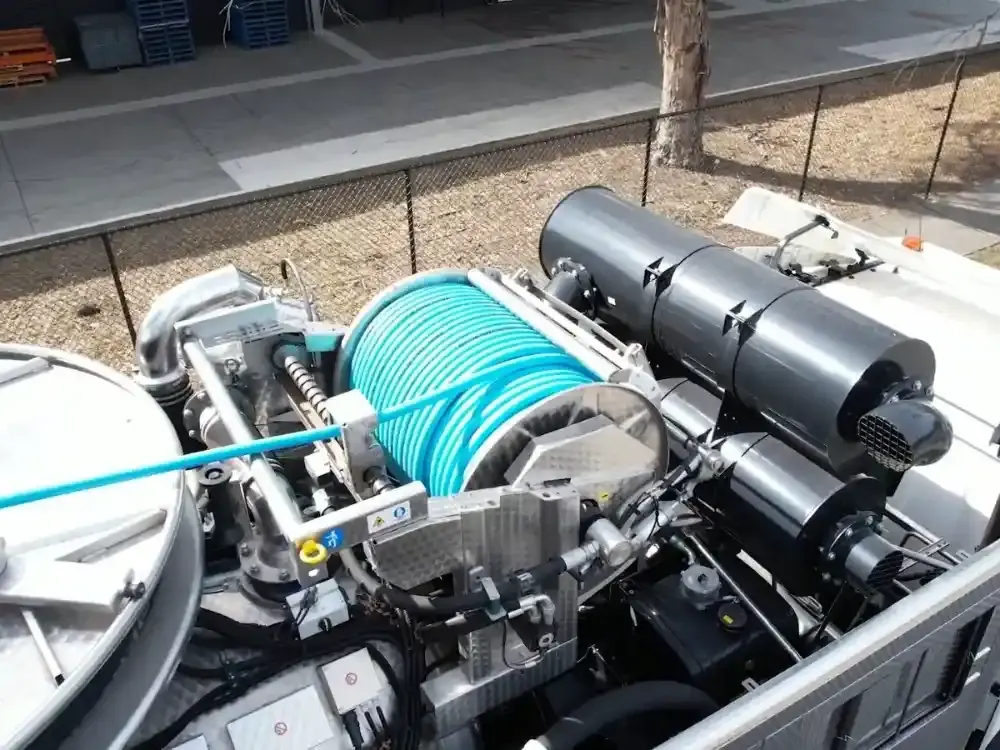
What hydro jetting is
A hydro jetter pumps water at high pressure through a hose with a nozzle that pulls itself down the pipe. The jets scour grease, scale and silt off the walls and flush it downstream. It is different from cabling, which cuts through a blockage but leaves a coating on the pipe.
Jetting is the right tool for recurring clogs from grease and buildup. It is not for a pipe that has collapsed or is badly cracked, which is why a camera belongs before and after.
Factors that set the price
- Line length. A short line to a nearby main is quicker than a long run.
- Pipe size and material. A four-inch cast iron line takes different equipment from a plastic one.
- Amount of buildup. Heavy grease or scale needs more passes.
- Access. A cleanout makes it easy. Without one, the crew works through a toilet or a roof vent.
- Camera. Inspection before and after adds time but prevents surprises.
- Timing. After-hours emergency work may be priced differently from a scheduled visit.
A quote that is a single flat number without asking about these is a quote that may change on site.
What to ask for in the quote
Questions to ask any plumber
- 1Does the price include a camera inspection?
- 2How many passes and how much time?
- 3What happens if the camera shows damage?
- 4Is there a charge if the line cannot be jetted?
- 5Will I get the video?
We give a price before work starts and tell you what happens if the line turns out to be damaged. Compare that with how other companies handle it.
Jetting versus cabling: cost over time
Cabling is usually less costly per visit. If the line is clogged by a single blockage, it is the right fix. If grease or scale is the problem, cabling gets a quick fix and the clog returns, so the cost over a couple of years may exceed that of a single jetting.
If the line is damaged, neither is the answer. The camera tells you, and our sewer line repair page covers what comes next.
How often to jet
A clean residential line may never need jetting. A line with grease, roots or scale may need it every few years. Restaurants and apartment buildings may need it much more often. We recommend an interval based on what we find on camera, and not a calendar.
Between visits, keep grease out of drains, avoid flushing wipes and know where your cleanout is. See drain cleaning for habits that protect the line.
A realistic example of how a quote is built
Consider two houses. In the first, a four-inch plastic line runs 40 feet to the street with an accessible cleanout. A short camera run shows grease and a little silt, and one jetting pass clears it. In the second, a four-inch cast iron line runs 90 feet with a bend, a root mass and heavy scale. It needs a root cut, then several jetting passes and a careful camera review.
The two jobs use the same machine and produce very different prices. The difference is not the plumber's mood. It is time, passes, equipment and risk. A quote that explains those items is more trustworthy than one that does not.
Red flags in a jetting quote
- A flat price quoted without asking about the line.
- No camera before or after.
- Pressure for a larger job than the symptoms justify.
- No mention of what happens if the pipe is damaged.
- A refusal to show you the footage.
A good company welcomes questions. If someone gets defensive when you ask what is included, that tells you something.
What happens to the cost if the camera finds damage
Sometimes the camera shows a crack, a belly or a collapsing section. In that case, jetting is not recommended and the job changes. We stop, show you the footage and explain the options. Cleaning may still be done gently with a cable to restore flow, but the real answer is a repair.
That is why a good quote spells out what happens in that case. You pay for the camera and the work done, and nothing is jetted that should not be. If you need a repair, you will have the video to compare quotes from anyone you choose.
Cleaning now and fixing later: planning the spend
If a line is partly damaged but still usable, jetting can buy time while you plan a repair. That is a legitimate choice, as long as you know what the camera showed and how long the line might last. The risk is spending on repeated cleanings for a line that needs replacement.
Ask for the camera footage and a short written note about the condition. Set a budget for the repair you expect to need, and decide in advance how many cleanings you will pay for before you act. Having that plan turns a repeated emergency into a managed project.
Local note for Concord homes
Where your sewer line goes
Homes in Concord are served by the city's wastewater system, which runs through the Hall Street plant and the Penacook plant, according to the city. The city operates the plants and the mains. For where the city's side ends and yours begins, General Services at 603-228-2737 can confirm for your address.
If a camera shows that your blockage is in the city main, report it, and the repair is the city's. If it is in your lateral, the repair is yours. In Hooksett, sewer is billed quarterly by the sewer commission, and in Bow and Loudon, many homes are on septic, where jetting the house line is only part of the picture. See Hooksett and Bow.
Questions homeowners ask
It should be offered. A camera before and after confirms the line is safe to jet and clean afterward.
For recurring grease or scale clogs, often yes. For a single clog, a cable is usually enough.
The city. Report it to Concord General Services. A camera video helps show where it sits.
Still have a question about your situation? Call the 24/7 line and talk it through with a dispatcher.
Call (603) 815-9179Sources. According to the following: Wastewater plant locations and the city's private-property rule are from the City of Concord's wastewater and leak detection pages.