
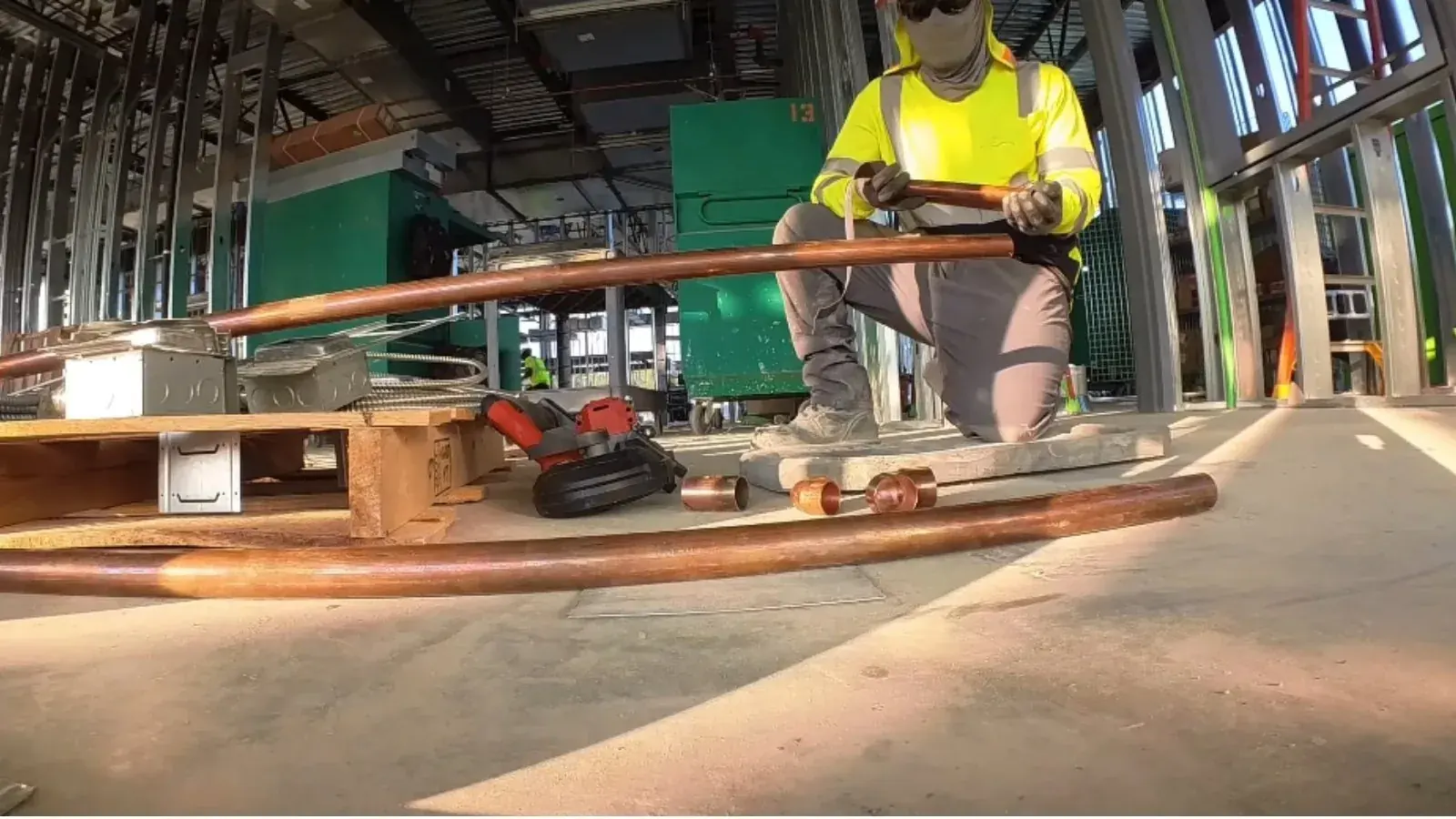
What we install
Common jobs include new bathrooms, kitchen sink and dishwasher hookups, laundry and utility sinks, outdoor spigots, basement bathrooms, water treatment equipment and pumps. We also add shutoff valves where a house has none, which pays off the first time you have a leak.
For a new bath or kitchen, we coordinate the rough-in with the contractor, test the lines under pressure before walls close and return for finish work when fixtures are ready.
Basement bathrooms and below-grade drains
A bathroom below the main sewer level cannot drain by gravity. It needs a sewage ejector pump in a sealed basin, or a below-floor drain cut through the slab to a lower connection. Which is right depends on the depth of the sewer and the layout of the house.
A sump pump is a different device. It moves groundwater from a pit to the outside to keep a basement dry. A sump pump and an ejector pump are often confused, but one handles groundwater and the other handles sewage. We install either, and the right choice is not always obvious.
Do you need a water softener in Concord?
Often not. The city's treated water averages about 12 parts per million of hardness in its 2022 report, which is soft. Softeners remove hardness, so in city water they have little to remove. We would sooner tell you that than sell you one.
On a private well, the picture changes. Wells in nearby towns can carry hardness, iron or manganese, and the state's environmental agency recommends testing well water at an accredited lab every few years. If your test shows a problem, we can install the right treatment. Our Bow page covers the well testing data for that town.
| Water source | Common issue | Treatment to consider |
|---|---|---|
| Concord city water | Very soft, chloramine disinfectant | Usually none for hardness, carbon filter for taste if wanted |
| Private well | Hardness, iron, manganese | Softener or iron filter after a lab test |
| Private well, test shows arsenic or radon | Health-related contaminants | Specialized treatment designed from your lab results |
Plumbing Installation help is one call away, any hour of the day.
Call (603) 815-9179Gas piping, safety first
If you smell gas, leave the building, then call 911 or your gas utility from outside, before you call us. Do not flip switches or use a phone indoors. Gas problems are for the utility first, and we help with plumbing after it is safe.
For planned installs, we connect and pressure-test gas piping that serves plumbing appliances such as water heaters. We tell you when a gas job belongs with the utility or another trade.
New construction and additions
A new build or addition needs a rough-in plan: drain slopes, vents, supply layout and the point where it ties into the existing house. Mistakes buried in a wall are costly. We review plans with the builder and flag conflicts early.
Concord's Building Safety Division at 41 Green Street handles permits, and the licensed contractor schedules plumbing inspections with the city's inspector. We take care of that step, so you do not have to. For a house with failing pipes, repiping is often the first project.
Before we start
A short prep list
- 1Choose fixtures or tell us the model numbers.
- 2Share plans or photos of the space.
- 3Confirm where the main shutoff is.
- 4Plan for a short water shutoff.
- 5Tell us about any permits already pulled.
Looking after pumps once they are in
A sump pump needs a test twice a year. Pour a bucket of water into the pit and watch the float lift and the pump discharge. A pump that runs but does not move water has a stuck check valve or a clogged impeller, and spring thaw in New Hampshire is a bad time to find that out.
Ejector pumps handle sewage and should be on their own circuit with a sealed basin lid. If the alarm sounds, stop using the basement bathroom and call us. Pumps that serve a wet basement are the ones most often called in on a stormy night, so a battery backup is worth considering.
Plumbing installation questions
Yes. We check that they fit and are in good condition before we begin.
Yes. We install sump and ejector pumps, and we explain which one your situation calls for.
Probably not for hardness. If you have a private well, a lab test tells you what you need.
We tell you whether your job needs one, and the licensed contractor arranges the inspection with the city's plumbing inspector.
Still have a question about your situation? Call the 24/7 line and talk it through with a dispatcher.
Call (603) 815-9179Sources. According to the following: Water hardness is from the City of Concord's Water Quality Report. Well testing guidance, including radon and arsenic, comes from the New Hampshire Department of Environmental Services.