
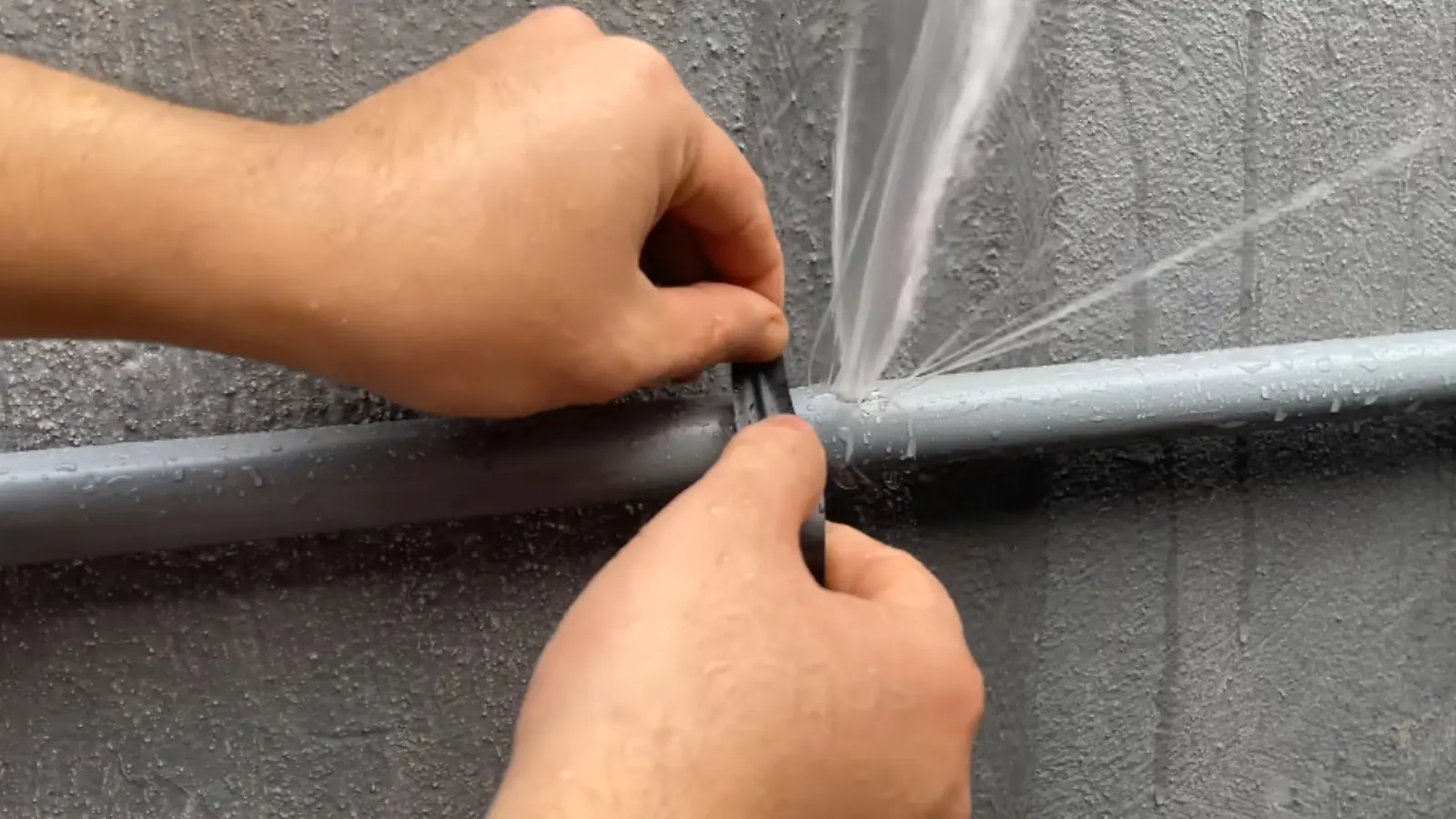
When a burst pipe is an emergency
Any pipe that is spraying, pouring or soaking a ceiling is an emergency. So is a pipe that has frozen solid and is bulging or frosted, because it may split the moment it thaws. If you can see water, shut the main. If you cannot find the main, close the valve at the water meter and call us.
Concord's average January low is near 13 degrees, and the frost line is 48 inches. A hard cold snap after a mild week is when we get the most calls, usually from pipes in exterior walls, unheated garages, crawlspaces and rooms over open porches.
Why pipes burst in New Hampshire winters
Ice does not usually split a pipe where it forms. Expanding ice raises pressure between the ice plug and a closed faucet, and the weakest spot gives way, often a few feet from the ice. That is why the split can be in a section that never froze.
The leak often appears only after the thaw. A frozen pipe that was holding water as ice starts to flow once it melts, which is why people discover a burst on a warm afternoon after a cold night.
Repair options after the water is off
| Pipe type | Typical repair | Notes |
|---|---|---|
| Copper | Cut out the split and sweat in a new section | Several splits mean replacing the run |
| PEX | Cut and splice with crimp or expansion fittings | PEX tolerates freezing better than copper |
| CPVC | Cut and re-glue a new piece | Old CPVC can be brittle and crack again |
| Galvanized steel | Replace the section with new pipe | Corroded inside, often best replaced in full |
If a house has old galvanized or brittle lines that keep leaking, patching gets expensive in time and money. We explain when whole-house repiping becomes the better answer.
Burst Pipe Repair help is one call away, any hour of the day.
Call (603) 815-9179Frozen but not yet burst
If a pipe is frozen and not leaking, open the nearest faucet slightly, then apply gentle heat with a hair dryer starting at the faucet end and working toward the frozen section. Never use a torch or open flame. Leave the faucet open until water flows normally.
If you cannot reach the frozen section, or it is inside a wall, call us. Opening a wall without a plan makes things worse, and we can often thaw the pipe and check it for hidden damage before it fails.
Cleanup and what insurance wants to see
After the repair, water extraction and drying are the next job. We are plumbers, not restoration contractors, but we will tell you where we saw water travel so the drying crew knows where to look. Take photos before anything is moved.
Keep the damaged pipe section if you can. Some insurers want to see it, and it tells us whether the failure was from freezing or a defect. We note the location and cause on our paperwork.
Keeping pipes from freezing again
After the repair
- 1Insulate pipes in garages, crawlspaces and exterior walls.
- 2Let a faucet drip slowly during extreme cold on a vulnerable line.
- 3Open cabinet doors on exterior walls to let warm air reach pipes.
- 4Disconnect garden hoses and shut off exterior faucets in the fall.
- 5Know where your main shutoff is and test that it turns.
A line that froze once will freeze again. We can reroute it, insulate it or move it inside the heated envelope of the house.
Burst pipe questions
Yes. We take burst pipe calls 24/7, including holidays and storms. Shut off the main valve, call us and we will tell you what else to do while a plumber is on the way.
Only if you can reach the panel without stepping in water. If water is near the panel, stay away and tell the dispatcher, who can advise on the safest next step.
Not if we fix the cause. A pipe that froze once usually needs insulation or rerouting, and we look at that during the repair.
Yes. We locate the split, open the smallest section of drywall we can and repair the pipe. We do not do the drywall finishing.
Still have a question about your situation? Call the 24/7 line and talk it through with a dispatcher.
Call (603) 815-9179Sources. According to the following: Frost depth and January low temperature are from the City of Concord's published climate and structural loads data.