
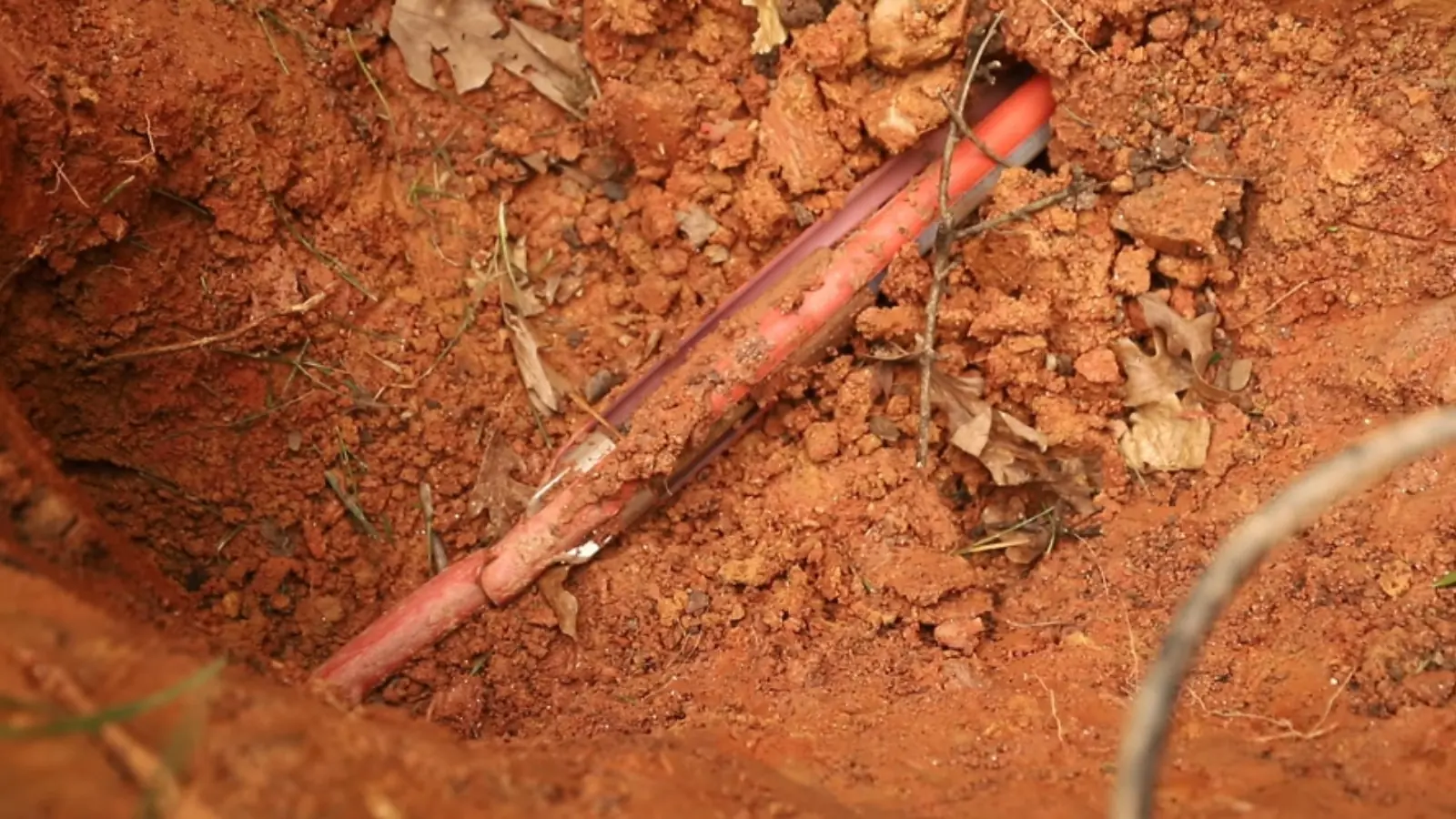
No water or a wet yard: when a water line is an emergency
The service line runs from the water main at the street to your house. If it breaks, you lose pressure or water completely, or you see a soggy patch, a bubbling spot in the lawn or water seeping up through a driveway crack. A meter that spins with every fixture off is the clearest warning.
Water is on in the street, so a break wastes it quickly and can undermine soil under a driveway or foundation. Shut the main valve inside the house and call. For leaks at the street or the meter itself, report them to Concord General Services at 603-228-2737, or after hours at 603-225-8696.
Where the city stops and you start
The city is not responsible for leaks on private property. That is the rule on its own leak detection page, and it means a break on your side of the connection is a repair you arrange. General Services can confirm where its responsibility ends for your address before you dig.
We locate the leak first. A break in the street main or at the meter is a call to the city, and we will tell you if that is what we find rather than quote a repair you do not need.
Low water pressure
Low pressure that affects the whole house points to the service line, a partly closed valve, a failing pressure regulator or a clogged pipe. Pressure that is low on only one faucet is usually an aerator or cartridge. A pressure gauge on an outdoor spigot tells us which case we have.
Older galvanized steel service lines corrode from the inside and narrow over decades, strangling flow. Replacing the line is the permanent fix, and our repiping page explains how that fits with replacing the pipes inside.
Water Service Line Repair and Replacement help is one call away, any hour of the day.
Call (603) 815-9179Repair or replace the service line
| Situation | Usual choice | Why |
|---|---|---|
| One clean break in newer pipe | Spot repair | Short dig and a coupling |
| Old galvanized or lead pipe | Replace | Corrosion and lead concerns |
| Shallow line that froze | Replace deeper or insulate | Frost depth is 48 inches |
| Repeated leaks in one line | Replace | More leaks are coming |
The line is usually copper, plastic or older galvanized or lead. Modern replacement uses copper or PEX rated for burial. We can often bring in the new pipe by trenching or by a trenchless pull when conditions allow.
Lead and old service lines
The city's water quality report notes that lead enters drinking water mainly from service lines and home plumbing, not from the treated water. It reported a 90th percentile lead level of 5 parts per billion in sampling, well below the 15 parts per billion action level. If your house is old and you do not know your pipe material, we can check where it enters at the meter.
The city advises flushing cold water for 30 seconds after the water has sat for hours. If you replace a service line, ask us to confirm that no lead remains in the portion we are responsible for.
Digging safely in New Hampshire
811 is free and required before digging. Utility lines run through yards, and hitting one is dangerous. We call it, wait for marks and keep the trench as short as we can. The excavation must reach below the 48-inch frost depth so the new line is protected from freezing.
For a house that was recently flooded or has pipes frozen near the line, check our burst pipe repair page for in-house repairs.
Water line questions
Yes. We take water line calls 24/7. Shut the main inside the house and call us.
Signs are low pressure, a running meter with all fixtures off and a wet spot in the yard. A leak detection visit confirms it.
Many are done in a day, depending on length, depth and surface restoration. We explain the schedule once we see the route.
Sometimes. Where one applies, the licensed contractor schedules the plumbing inspection with the city's inspector through the Building Safety Division.
Still have a question about your situation? Call the 24/7 line and talk it through with a dispatcher.
Call (603) 815-9179Sources. According to the following: Lead and copper results, the 30 second flushing advice and the private-property rule come from the City of Concord's 2023 Water Quality Report and leak detection page. Frost depth is from the city's structural loads guidance.