
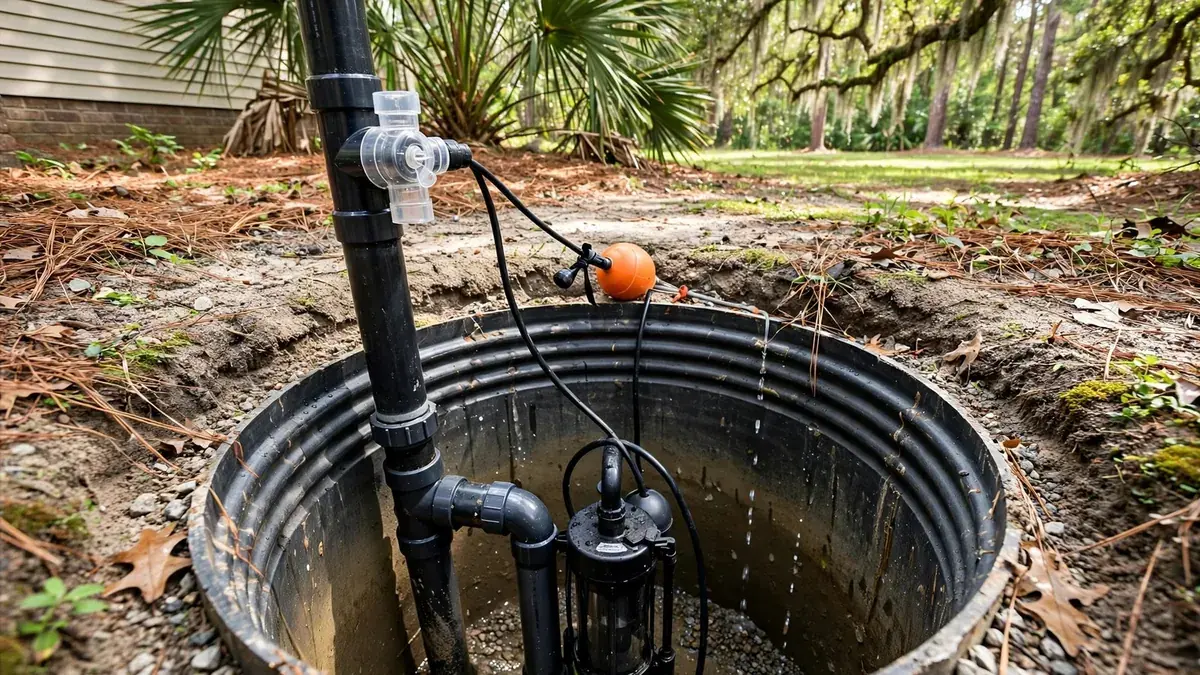
How a sump system works
A sump pit sits at the low point of a basement floor and collects groundwater. A pump in the pit turns on when a float rises and sends the water up a discharge pipe and out of the house. A check valve in the line stops water from flowing back into the pit when the pump stops.
The pit, the pump, the float, the check valve and the discharge are all parts of one system. A weak link in any of them leads to a flooded basement on a stormy night.
Pit placement and pump choice
The pit goes at the lowest spot or where water enters. Cutting the slab and setting a basin takes a day. A submersible pump sits in the water, runs quietly and fits most homes. A pedestal pump sits above the pit and is easier to service but louder.
Pump size depends on how much water comes in. A larger pump is not always better, since a pump that cycles too fast wears out. We size the pump to your inflow.
Where the water goes
The discharge should carry water well away from the foundation, so it does not just seep back. Aim for at least 10 feet, onto ground that slopes away, or into a drywell or storm drain where allowed.
Do not connect a sump pump to the sanitary sewer. Many municipalities prohibit it because storm water overloads the sewage system. In Concord, check with the Building Safety Division at 603-225-8610 before you decide where to discharge.
Keeping the outdoor end from freezing
A discharge pipe that ends in a trapped bend can fill with water and freeze, and then the pump has nowhere to push. Slope the pipe continuously downward to the outlet so it drains after every cycle. Use a discharge that can open if the end freezes, such as a pop-up emitter or a second opening.
| Problem | Cause | Fix |
|---|---|---|
| Water backs up in the line | Frozen outlet | Use a pop-up emitter or open end |
| Pipe splits | Water trapped in a low spot | Slope the line continuously |
| Ice buildup near the house | Discharge too close | Extend the line |
| Pump runs but moves no water | Frozen or clogged line | Thaw and clear |
Backup power and alarms
Storms that bring heavy rain often knock out the power. A battery backup pump or a water-powered backup keeps the pit from overflowing. A high-water alarm tells you before it is a flood. For a basement bathroom, an ejector pump is a separate device with its own basin, as covered on our installation page.
Test the system twice a year. Pour in a bucket of water and watch the pump start, discharge and shut off.
Installation steps, from pit to discharge
- Choose the location. At the low point or where water enters.
- Cut the slab and dig the pit. Set a basin with a perforated wall and a bed of gravel.
- Set the pump. On a solid base, with the float free to move.
- Run the discharge. Up through the rim joist, with a check valve and a union.
- Route outside. Slope away from the house to an approved outlet.
- Test. Fill the pit and run several cycles.
We also seal the basin lid to reduce humidity and radon, and add a high-water alarm where the budget allows.
Maintenance that prevents the 2 a.m. failure
Pumps fail when they are neglected. Clear debris from the pit, test the float and make sure the check valve is working, which you can hear as a small clunk after the pump stops. A pump that runs without moving water has an air lock or a blocked impeller.
Plan to replace a primary pump every ten years or so, sooner if it runs often. Replace the battery in a backup every few years. A pump that is tested twice a year rarely surprises you.
Common mistakes in sump installs
- No check valve, so water drains back and the pump cycles constantly.
- A discharge that ends too close to the house.
- A float that rubs the side of the pit and sticks.
- No backup for power outages.
- A pit with no gravel base, which clogs with silt.
- An airlock because no relief hole was drilled in the discharge pipe.
Each of these is easy to avoid at installation and expensive to fix after a flood. Ask any installer how they handle each one.
Choosing between primary and backup pumps
A primary pump does the daily work, and a backup steps in when it fails or the power goes out. A backup can be a battery-powered pump sitting beside the primary, or a water-powered unit that uses household pressure to push water out. Each has trade-offs in cost, capacity and maintenance.
Battery backups need a fresh battery every few years and a charger that is checked. Water-powered units need city water pressure and do not work well on a private well. If a basement has flooded before, spend on the backup first, because the primary is the pump you expect to work, and the backup is the one that saves you the one time it does not.
Local note for Concord homes
Frost depth and thaw season
The minimum frost depth the City of Concord uses is 48 inches, so a discharge line buried shallow is at risk of freezing. The city also averages 67.7 inches of snow a year, and the thaw, with frozen ground and meltwater, is the busiest time for sump pumps.
Houses near rivers see higher water tables, including in Pembroke, near the Soucook, and Hooksett, along the Merrimack. If your basement floods each spring, an exterior pump and a well-planned discharge is worth more than patching the walls. See Pembroke and Hooksett. For wet-basement strategy, see our leak detection page to rule out plumbing leaks first.
Questions homeowners ask
At least 10 feet, onto ground that slopes away, so the water does not return.
Generally not. Many municipalities prohibit it, so check with the Building Safety Division.
Slope the pipe so it drains after each cycle, and use an outlet that can open if the end freezes.
Still have a question about your situation? Call the 24/7 line and talk it through with a dispatcher.
Call (603) 815-9179Sources. According to the following: Frost depth, snowfall and the Building Safety contact are from City of Concord pages. Ask the division about local discharge rules.