
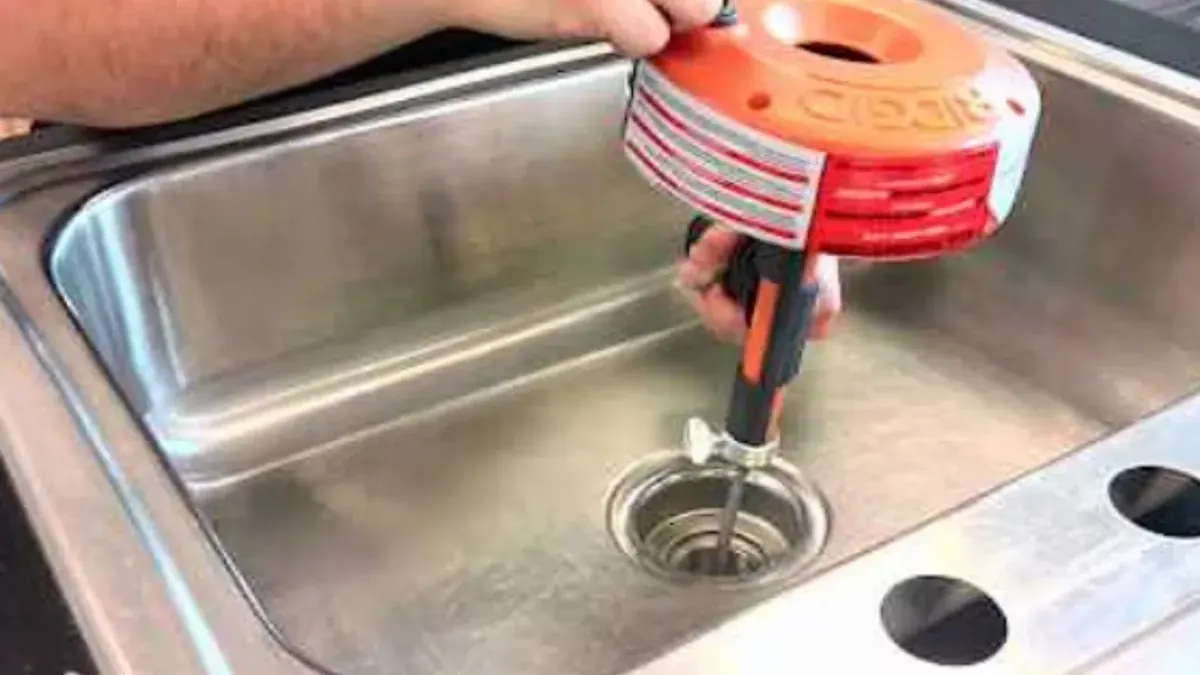
Start at the disposal and dishwasher
If the sink has a garbage disposal, the drain passes through it. A jammed or clogged disposal slows the sink even when the pipe beyond is clear. Turn off the power and clear the chamber with tongs, never your hand. Reset the unit and run cold water. Our garbage disposal page explains when to repair or replace.
A dishwasher usually drains through the disposal or the sink tailpiece. If the sink backs up when the dishwasher runs, the dishwasher hose or air gap is involved. Check the air gap, the small cap on the sink deck, for debris.
Double-bowl sinks: which side drains
A double-bowl sink with one slow side and one normal side points to the trap arm or tailpiece of the slow side. If both sides are slow, look further downstream. If water from one side comes up in the other, the shared drain is blocked after the tee.
Remove the trap under the slow side and clean it. A grease and food mat often collects in the first bend.
Grease, the slow killer
Cooking grease cools in the pipe, coats the walls and catches food. The line narrows over months until a small amount of waste blocks it. A plunger forces the grease deeper. A snake pokes a hole through it. Neither removes the coating. Hot water with dish soap helps in the early stages, but a jetter is the tool that removes it, as described on our hydro jetting page.
Pour grease into a can, not the sink. Wipe pans before washing.
Vent and air problems
A sink that glugs, drains in surges or smells of sewer gas may have a vent issue. Without air, water drains slowly and leaves the trap partly siphoned. A vent pipe on the roof can be blocked by debris, a nest or frost.
| Sign | Likely cause |
|---|---|
| Slow only when the dishwasher runs | Dishwasher hose, air gap or disposal |
| One side slow | Trap arm or tailpiece |
| Both sides slow, gurgling | Branch line or vent |
| Every fixture slow | Main line |
| Surging, glugging | Vent or partial blockage |
When it is the main line
If the kitchen sink is the lowest fixture on a shared line, a main line blockage can show up there first. Check the basement floor drain and the lowest toilet. If water rises in those when you run the sink, stop and call. See sewer line cleaning for what we do.
Keep in mind that chemical cleaners do not reach deep blockages, and they can harm pipes and a septic system.
Clearing a trap and tailpiece properly
Put a bucket under the trap and turn the slip nuts by hand or with channel-lock pliers. Pour out the water, then look inside and brush out the sludge. Inspect the washers, because a cracked washer will leak when you reassemble. Replace any that look flat or hard.
When you reassemble, thread the nuts by hand first so you do not cross-thread them, then snug them a quarter turn with pliers. Run water for a minute and look for drips. A trap put back crooked will hold water and drain slowly, so check that the arm slopes gently toward the wall.
Habits that keep a kitchen line open
Kitchen drain habits
- 1Scrape plates into the trash, not the sink.
- 2Pour cooled grease into a can.
- 3Run hot water with dish soap for a minute after washing greasy pans.
- 4Avoid putting rice, pasta or coffee grounds down the drain in quantity.
- 5Run the disposal with cold water, and for a few seconds after it stops.
A kitchen drain that is cleaned once a year with a jetter or a long cable stays clear much longer than one that is only treated when it stops.
What a plumber does that you cannot easily do
We run a camera into the line to see the cause, which can be grease, roots, a collapsed section or a belly that holds water. We use a cable machine and a jetter to clear the whole line, not just the trap. We also test the vent and check that the dishwasher connection is sound.
The point is to treat the cause. A kitchen line that was snaked and not cleaned returns to slow in weeks. One that was jetted and checked lasts much longer. Our drain cleaning visits include a flow test at every fixture before we leave.
When to stop and call
Stop if water rises in another fixture when you run the sink, if you smell sewage or if you have tried the trap and a plunger without improvement. Do not keep pouring chemicals down a drain that will not move. Continuing may make a bad situation worse and raises the risk of a splash.
When you call, tell the dispatcher what you have already tried and what you saw. That helps the plumber bring the right equipment. A kitchen drain that is slow in one spot is a short visit. A kitchen drain that backs up into the basement is a main line job, and we will tell you which one it is as soon as we have looked.
Local note for Concord homes
City main or your line?
In Concord, a blockage in the city's sewer main is the city's to clear, and a blockage in your lateral is yours. General Services takes calls at 603-228-2737, with an after-hours number of 603-225-8696. The city's own page says it is not responsible for problems on private property.
A quick sign of a city-main problem is a neighbor with the same issue. In Penacook and other village areas, a main blockage can affect several houses at once. If we camera your line and find the blockage past your property line, we show you the footage and you can report it. See Hopkinton and Loudon for areas with different sewer setups.
Questions homeowners ask
The disposal, dishwasher connection, a coated branch line or a blocked vent can slow a sink even without a clog in the trap.
Yes. If it drains through the disposal or tailpiece, a blockage there backs the sink up.
If neighbors have the same issue, or a camera shows a blockage beyond your property line, call Concord General Services.
Still have a question about your situation? Call the 24/7 line and talk it through with a dispatcher.
Call (603) 815-9179Sources. According to the following: General Services contact numbers and the private-property rule are from the City of Concord's leak detection page.