
Why leak costs vary so much
A leak under a sink and a leak under a slab share a symptom, and little else. The first can be fixed in minutes with a new washer. The second needs location, access and repair of a buried pipe. The cost depends on finding the leak, reaching it and fixing it, in that order.
A plumber who quotes a number over the phone without knowing which one you have is guessing. We give a price after we see the problem.
The main cost drivers
- Location. An exposed pipe in a basement is quick. A pipe inside a finished wall or under a slab takes longer.
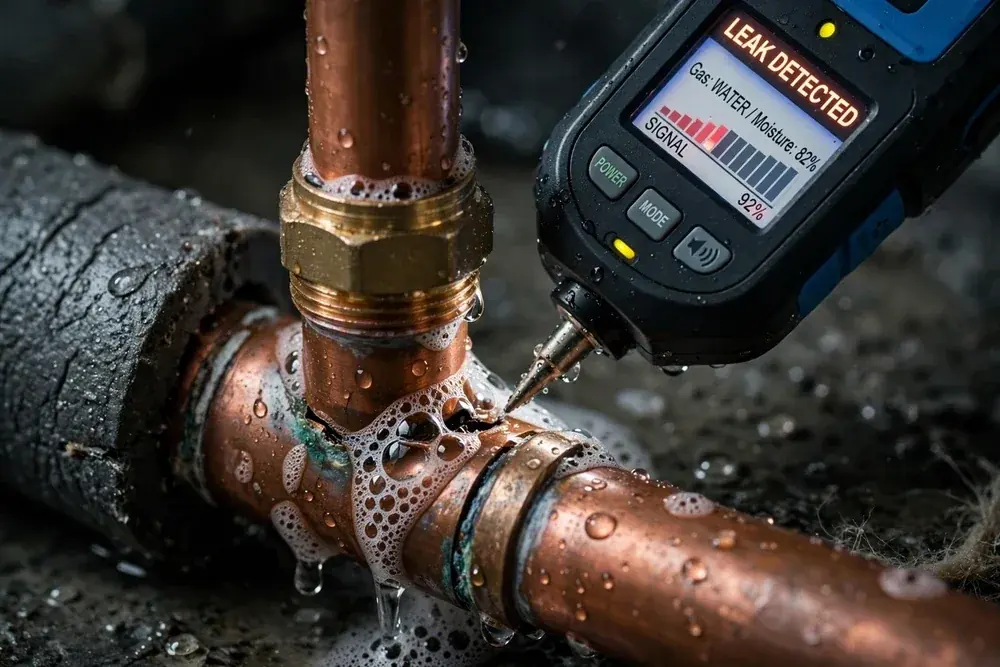
- Detection time. Hidden leaks need gear and time to find.
- Pipe material. Copper, PEX, galvanized steel and CPVC each repair differently.
- Access and restoration. Opening a wall means drywall and paint afterward, which is separate from plumbing.
- Damage. Water that has soaked insulation or flooring adds drying and repair cost.
- Timing. After-hours emergency work may be priced differently from a scheduled visit.
Common leak types and what is involved
| Leak | Typical work | Cost level |
|---|---|---|
| Dripping faucet or supply line | Replace a part | Low |
| Toilet base leak | Reset toilet, new wax ring | Low to moderate |
| Exposed pipe joint | Re-solder or replace a section | Low to moderate |
| Pipe inside a wall | Locate, open, repair, close | Moderate |
| Leak under a slab | Locate and break the slab, or reroute | High |
| Buried service line | Locate and excavate | Moderate to high |
Our leak detection team uses listening gear and thermal cameras to narrow the location, which keeps access cuts small.
Repair versus repipe
A single leak in a sound system is a repair. Several leaks in an aging system point to a larger problem. If you have had three leaks in a few years, ask whether repiping would cost less over time. A plumber who cares about your money will tell you when patching is a losing game.
The reverse is also true. We do not recommend a repipe for one pinhole in an otherwise healthy line.
Getting a fair quote
What to ask
- 1Is the price firm or an estimate?
- 2Does it include finding the leak?
- 3Does it include opening and closing access holes?
- 4What happens if the leak turns out to be larger?
- 5Will you give me the old pipe or fitting?
We tell you the price before work starts and call you before doing anything outside that scope.
Reading a written estimate
A good estimate lists what is being done, the materials and labor, whether access repair is included and what happens if the scope changes. It should say whether the price is firm. If a line says only repair leak with a number next to it, ask what that covers.
Ask whether a trip charge applies, whether after-hours work is priced differently and whether the estimate expires. These small items add up. We give the price before work starts and explain each part in plain language.
What you can do to limit the damage while you wait
- Shut off the water to the leak, or the main if you cannot find the local valve.
- Turn off power to wet areas if you can do so safely.
- Move belongings out of the path of water.
- Take photos for your insurer before cleanup.
- Run fans and open windows to start drying.
Water damage grows by the hour. The sooner water is contained and the area is drying, the lower the total bill, including the plumbing repair that follows.
Insurance, water damage and the plumbing bill
Homeowners policies often cover sudden water damage but not the cost of repairing the pipe itself. They may not cover slow leaks that went on for months. Policies differ, so read yours or ask your agent. Document the damage with photos before cleanup, and keep receipts for emergency steps.
We give a written description of what we found and what we repaired, which insurers often ask for. We do not make coverage decisions and we do not deal with insurers on your behalf, but we can provide the facts they will want to see.
Small leaks that are worth fixing early
A leak that seems minor today is often a cheap fix and a costly problem if ignored. A weeping supply line, a dripping valve stem or a sweating pipe joint can run for months, stain a ceiling and grow mold in a wall cavity. Fixing the part costs little, and repairing the damage afterward costs a lot more.
Check the places leaks start: under sinks, behind toilets, around the water heater and at the washing machine hoses. Look for stains, soft spots and a musty smell. A few minutes every few months catches most small leaks. If you find one, take a photo, shut off the nearby valve and call before it grows. We tell you the price before the repair, and you decide.
Local note for Concord homes
What a leak costs in water, too
The City of Concord's leak page says a typical household wastes more than 10,000 gallons a year to leaks, and that a showerhead dripping 10 times a minute loses over 500 gallons a year. A small leak is not free while you wait.
The city is not responsible for leaks on private property. If you suspect a leak between the street and the house, General Services at 603-228-2737, or 603-225-8696 after hours, can tell you what is on the city side. In Bow and Loudon, a leak may be on a private well line, and a leak there can run the pump constantly. See Bow and Loudon.
Questions homeowners ask
It depends on location, access and pipe type. We price after seeing the problem and before work starts.
Finding a hidden leak takes time and equipment. We tell you the price for detection and repair before we begin.
The city says it is not responsible for leaks on private property. General Services can confirm where its side ends.
Still have a question about your situation? Call the 24/7 line and talk it through with a dispatcher.
Call (603) 815-9179Sources. According to the following: Household leak and showerhead figures are from the City of Concord's leak detection page.