
Start with the pop-up stopper
Most bathroom sinks have a pop-up stopper on a rod. Over time, hair and toothpaste wrap around the stopper and the pivot, and even when the stopper is up, the water squeezes past it. Pull the stopper out, which usually means loosening a nut on the pivot rod under the sink, and clean it.
That one step fixes a surprising share of slow sinks. It takes five minutes and no tools beyond pliers.
Check the trap and tailpiece
The curved pipe below the sink is the trap. It holds a plug of water to block sewer gas, and it collects whatever slides past the stopper. Put a bucket underneath, unscrew the slip nuts and look inside. A gray, slimy buildup of soap and hair is normal. Clean it with a brush and reinstall.
Check the pipe running into the wall, too. If the sink drains fast with the trap off but slow with it on, the problem is the trap or its angle. If it is slow either way, the problem is beyond the trap.
Is it the vent?
A drain needs air behind the water. A blocked vent makes a sink drain slowly, gurgle or leave water in the bowl. A sink that gurgles as it drains, or toilets that gurgle when the sink empties, point to the vent or the branch line. Our toilet repair team sees the same symptom in toilets.
Vents are on the roof, and clearing them is not a homeowner job in winter. A plumber can check them safely.
Branch line buildup
| Test | Result | Likely location |
|---|---|---|
| Pull the stopper and clean it | Drains faster | Stopper |
| Remove and clean the trap | Drains faster | Trap |
| Slow with the trap off | Still slow | Branch line or vent |
| Other fixtures slow too | Yes | Main branch or main line |
| Gurgling sounds | Yes | Vent or partial blockage |
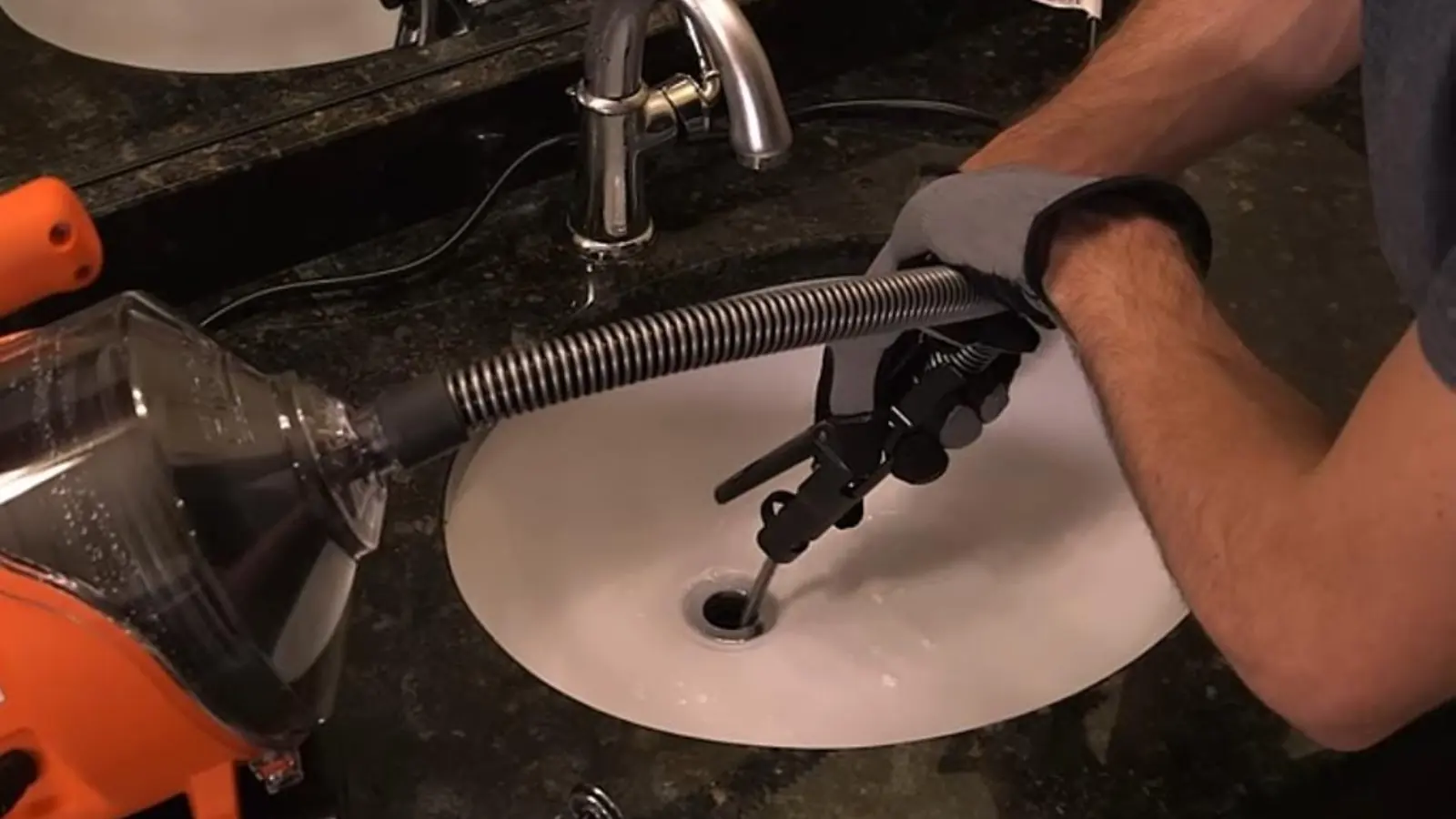
A branch line coated with soap and hair slows flow without blocking it. A drum machine or small cable cleans the walls. A jetter does it best, and our hydro jetting page explains when that is worth it.
Things that do not help
Chemical drain cleaners can eat through old pipes and leave fumes. They also fail on hair and soap, which they barely dissolve. Boiling water in a plastic trap can soften or warp it. Pouring baking soda and vinegar produces foam but has little effect on a real buildup.
A plunger on a sink works only when the overflow is blocked with a wet rag, otherwise the pressure escapes. Use it gently.
How to reset a pop-up stopper correctly
After cleaning, the stopper must be put back with the pivot rod through the correct hole in the stopper's arm. Too high and the stopper does not close. Too low and it does not open fully, which slows the drain by itself. Adjust the clevis strap on the rod until the stopper lifts about an inch above the drain opening.
Tighten the pivot nut by hand plus a quarter turn. Overtightening cracks the plastic and starts a drip. Test the stopper with the sink full, since a half-open stopper is one of the sneakiest causes of a drain that seems slow but is not clogged.
When the slow sink is a warning
A single slow sink is a nuisance. Slow sinks that appear together, or that return after you fix them, are a warning that the branch line is narrowing. Pay attention to the pattern. If the bathtub, the sink and the toilet are all slow, the shared line or the vent is the suspect.
Catching it early is cheaper than waiting for a backup. A cleaning of the branch line before it blocks completely is a short visit. Waiting until sewage appears makes it an emergency, which our sewer line cleaning crews handle at any hour.
Tools and supplies worth having
- A small bucket and old towels.
- Channel-lock pliers.
- A flexible drain brush, sold as a hair-removal tool.
- A spare trap washer or two.
- A flashlight.
- Gloves.
A plastic hair-removal strip pulled out of the drain can show you what is down there. It is a cheap, safe way to clear hair near the top of the drain. If it comes up clean, the problem is deeper and a plumber should check the trap arm and branch line.
Preventing slow sinks in the first place
Most slow sinks are a maintenance issue. Clean the stopper every couple of months. Run hot water for a minute after brushing teeth or shaving, to rinse residue down the line. Avoid rinsing hair, cosmetics or toothpaste caps into the drain, and use a mesh stopper if someone in the house sheds a lot of hair.
Once or twice a year, remove and rinse the trap. It takes ten minutes and shows you how the drain is doing. If the trap is always full of heavy sludge, the line behind it probably is too, and a cleaning visit before a clog forms is cheaper than an emergency. Pay attention to a sink that slows down again within weeks of being cleared, since that suggests a deeper problem.
Local note for Concord homes
When the plumbing change needs an inspection
If fixing a slow sink turns into replacing drain or vent piping, the work can need a permit. In Concord, plumbing inspections are scheduled by the licensed plumbing contractor with the city's Plumbing and Mechanical Inspector, through the Building Safety Division at 41 Green Street.
That is a good reason to have a licensed plumber do pipe changes in an older house, where fixing one section often reveals galvanized or cast iron that needs attention. For neighboring towns, see Hopkinton and Hooksett, where older village homes see the same slow drains.
Questions homeowners ask
Usually the stopper, the trap or a coated branch line. Cleaning them in order finds the cause.
It can. A drain that cannot get air gurgles and drains slowly.
We do not recommend it. It can damage pipes and rarely clears hair and soap.
Still have a question about your situation? Call the 24/7 line and talk it through with a dispatcher.
Call (603) 815-9179Sources. According to the following: Inspection scheduling is from the City of Concord Building Safety Division's Who To Call For Inspections page.