
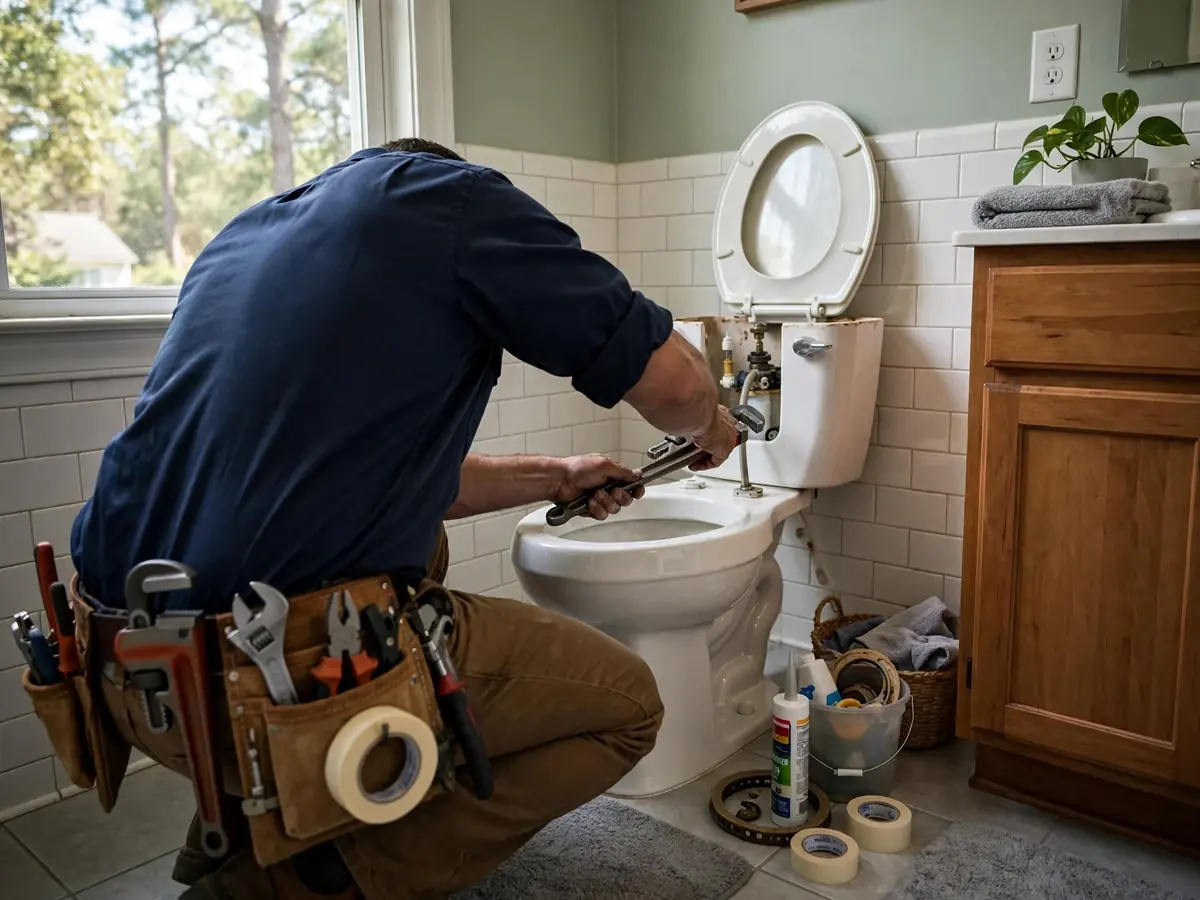
What the shutoff valve does
The shutoff, also called an angle stop, sits on the wall or floor behind the toilet and feeds the supply line to the tank. Turning it clockwise closes the water so you can repair the toilet, replace the fill valve or stop an overflow. Every fixture in the house should have one.
When it works, it is invisible. When it does not, a small problem turns into a flooded bathroom, because there is no quick way to stop the water short of the main valve.
Test it before you need it
Once a year, turn each shutoff closed and open again. It should move smoothly and stop the flow when you flush. If it is stiff, leaks around the stem or does not close fully, it is already failing. A valve that has never been turned in ten years often seizes the first time you try.
- Close it gently. Turn clockwise by hand, no tools.
- Flush. The tank should not refill.
- Look for drips. Check the stem and the connection to the supply line.
- Open it back up. Turn all the way counterclockwise, then back a quarter turn.
Common failures
| Symptom | Cause | What to do |
|---|---|---|
| Will not turn | Mineral or corrosion lock | Replace the valve |
| Drips around the stem | Worn packing | Tighten the packing nut slightly, or replace |
| Leaks at the supply line nut | Loose or old washer | Tighten, or replace the line |
| Does not stop the water fully | Worn seat or washer | Replace the valve |
| Handle spins freely | Stripped stem | Replace the valve |
Old multi-turn valves with rubber washers are the most common offenders. Quarter-turn ball valves last longer and are easier to tell open from closed. If you are replacing one, choose a quarter-turn type.
Replacing it
To replace the valve, shut the main water valve, open a faucet to drain the line and disconnect the supply line from the valve. The valve itself either threads on, is soldered to copper or is compression-fitted. Compression fittings are the simplest, but they can only be reused so many times. Soldered valves on old copper are best left to a plumber, because heat near wood and old pipe is a fire risk.
If the valve will not hold after you replace it, or the pipe behind it is corroded, stop and call. The problem may be the pipe, and forcing it can break the line inside the wall. Our faucet and fixture repair team replaces stops and supply lines together.
A running toilet is a bigger leak than you think
While you are at the valve, check that the toilet is not running. The City of Concord's leak page says an older toilet can use up to 6 gallons a flush, compared with 1.3 for a WaterSense model, and a silent leak around the flapper adds up fast. To test, put dye in the tank, wait 15 minutes without flushing and look for color in the bowl.
If the valve was stiff and the toilet is also running, replace the fill valve and flapper at the same time. They are inexpensive parts and the work overlaps.
Mistakes that turn a stuck valve into a flood
The most common mistake is forcing a seized valve. A handle that will not turn has corrosion or hardened packing holding the stem, and extra torque snaps the stem or cracks the body. A valve that breaks under force often leaves you with a pipe spraying water and no quick shutoff. Stop when you feel real resistance.
The second mistake is skipping the supply line. A braided stainless line lasts years, while an old plastic or thin chrome line can burst without warning. Replace the line whenever you replace the valve, and write the install date on masking tape on the wall so you know when it is due.
The third is losing track of the main. Everyone should know where the main shutoff is and that it turns. If a fixture valve fails, the main is the only thing standing between you and a flooded bathroom.
What a plumber checks while replacing the valve
A good replacement is more than a new valve. We check the pipe stub for corrosion, since a thin or pitted stub will not hold a new compression fitting. We check the escutcheon and wall for water damage that a slow drip may have caused. We also test pressure at the fixture and the shutoff of every other stop in the room.
If other valves in the house are the same age and style, we tell you. Replacing a few at once costs less than separate visits, and it is the cheapest flood insurance a house can have.
Local note for Concord homes
Chloramine and rubber parts
Concord's treated water uses chloramine for secondary disinfection, according to the city's water treatment page. Chloramine can wear rubber parts such as flappers and washers faster than plain chlorine does, which is one reason rubber seals in a toilet tank can go soft or crack.
In practice, replace the flapper and the shutoff's washer on a schedule instead of waiting for a leak. The same soft water leaves little scale inside a valve, so a stuck stop in a Concord house is usually corrosion or age, not mineral buildup. If you live in Bow or Loudon on a private well, hardness and iron can lock valves faster. See our Bow and Loudon pages for what well homes deal with.
When to call a plumber
Call when the valve will not close and water is flowing, when the supply line is corroded or when there is a leak inside the wall. A stuck valve forced the wrong way can break and leave you with no way to stop the water. We will tell you how to shut off at the main while we head over.
Questions homeowners ask
The shutoff controls one fixture. The main valve controls the whole house. Both should be tested yearly.
Not in type. In Concord, the use of chloramine in city water can age rubber parts faster, so replace seals before they fail.
If it is a compression type on copper or PEX, many homeowners can. If it is soldered or the pipe is corroded, call a plumber.
Still have a question about your situation? Call the 24/7 line and talk it through with a dispatcher.
Call (603) 815-9179Sources. According to the following: Toilet flush volumes and the dye test come from the City of Concord's leak detection page. Chloramine use is from the city's water treatment page.