
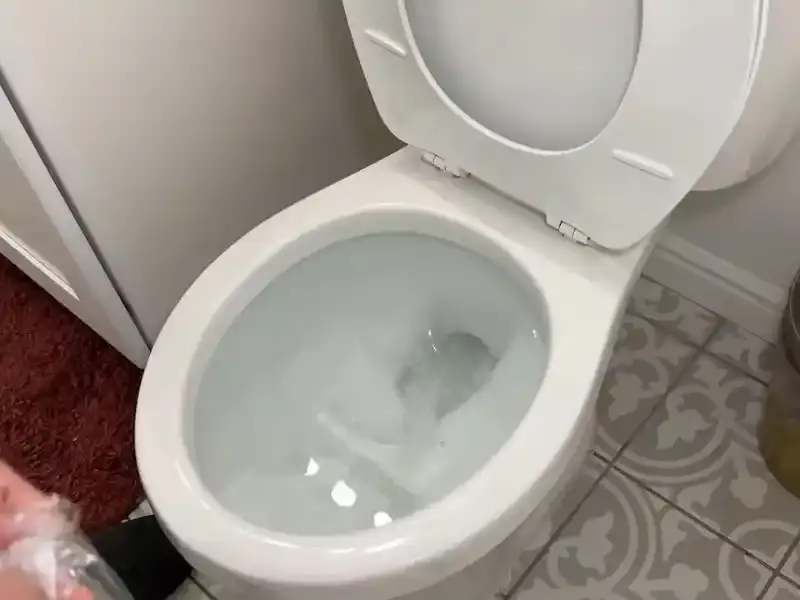
What the vent pipe does
Every drain needs air. A vent pipe runs from the drain system up through the roof so air can enter as water leaves. Without it, water draining creates suction, pulls air through the trap and makes the toilet gurgle. It also lets sewer gas escape above the roof.
When a vent is blocked, the drain behaves as though it is clogged even when the pipe is clear.
Signs of a blocked vent
- The toilet gurgles when you flush.
- Other fixtures gurgle when the toilet runs.
- The flush is slow and weak.
- The water level in the bowl drops between flushes.
- You smell sewer gas inside the house.
These can also point to a drain clog, so rule that out first. If a plunger or auger clears the problem, the drain was the cause. If the symptoms come right back, suspect the vent.
What blocks a vent
Common causes are leaves and debris, bird or squirrel nests, ice and frost buildup in cold weather and a collapsed or crushed pipe in the attic. A wasp nest at the opening is another. Vents on a roof are easily hidden by snow.
Frost closure is a New Hampshire-specific problem. Warm moist air rising through a vent freezes at the opening in extreme cold, and the opening can shrink to a pinhole.
Safe checks from the ground
Look at the vent from the ground with binoculars. A visible nest, ice or leaves is a clue. Do not climb on a snowy or icy roof. A roof fall is far more dangerous than a gurgling toilet.
Test the vent by running a garden hose into it. If water backs up in the pipe, the vent is blocked. This is a job best left to a plumber who has the right access, and who knows to check for a break in the attic pipe.
How a plumber clears it
- Inspect from the roof or attic. We check the opening and the pipe.
- Clear the opening. Debris, nests or ice are removed.
- Run a cable or hose. We push through to the main stack.
- Camera or smoke test if needed. A smoke test finds cracks and disconnected sections.
- Test the drains. We confirm the fixtures drain quietly.
If a vent has been cut or crushed, we repair the pipe. A fix that clears the symptom without finding the cause just brings it back. See drain cleaning if the drain turns out to be the problem.
Roof and attic safety
Safety steps for roof vents
- 1Never climb onto a snowy, icy or wet roof.
- 2Look from the ground with binoculars instead.
- 3Do not stand on a ladder alone near power lines.
- 4Call a plumber with roof access gear for anything above the first story.
- 5Keep children and pets away from the base of the ladder.
How vents are laid out in a house
Most houses have one or more vent stacks that rise through the walls to the roof. Individual fixtures often tie into the stack through smaller vents. A sink or toilet may share a vent with others nearby. That is why one blocked vent can affect several fixtures, and why a blocked branch can make one fixture misbehave.
In older houses, vents may be added by earlier owners in ways that do not match current practice. A vent that runs sideways for a long distance can collect condensation and trap water. Tracing an unusual vent run is part of how a plumber diagnoses a stubborn gurgle.
Why the sewer gas smell matters
A trap holds a plug of water that blocks sewer gas. When a vent is blocked, draining water can pull that plug out, and the smell comes up through the fixture. The odor is a nuisance, and in high concentrations, sewer gas is a health concern.
If you smell sewer gas and the toilet or sink has been gurgling, run water into any rarely used drains to refill the traps, then call. A floor drain that has been dry for months is a common source, and a quart of water fixes the smell until the vent is repaired.
Telling a vent problem from a drain problem in five minutes
- Flush the toilet and watch. A slow, gurgling flush with a bowl that drops afterward points to air problems.
- Run the sink nearby. If the toilet bubbles when the sink drains, the shared line or vent is involved.
- Try a plunger. If the bowl clears and stays clear, it was the drain.
- Listen at the roof vent. From the ground you may hear a hiss of air during a flush if the vent is open.
- Check other fixtures. Slow drains throughout suggest the main line, not the vent.
None of this replaces a proper inspection, but it narrows the problem before the plumber arrives and saves diagnostic time.
Preventing vent problems
Vents are hard to maintain because they sit on the roof, out of sight. A few habits help. Keep tree branches trimmed back from the roof so leaves do not collect around the opening. Have a vent screen installed where nests are a problem. Check the vents from the ground each fall.
If you are re-roofing or adding insulation, ask the contractor to protect the vent pipes and keep insulation away from the openings. A new roof that buries a vent in shingles causes exactly the symptoms in this guide. A short walk around the house with binoculars once a season catches most problems early.
Local note for Concord homes
Frost, snow and roof vents
Concord averages 67.7 inches of snow a year and a January mean low near 12.9 degrees Fahrenheit. Vents that were open in October can be partly closed by frost or buried by snow in February. If your toilet starts gurgling during a deep freeze, the vent opening is a prime suspect.
Changing vent or drain piping can call for a permit. In Concord, plumbing inspections are scheduled by the licensed contractor with the city's plumbing inspector through the Building Safety Division at 41 Green Street, 603-225-8610. See our Pembroke and Bow pages for neighboring towns.
Questions homeowners ask
If clearing the drain does not help and symptoms return, the vent is likely blocked. Gurgling when other fixtures run is a sign.
Yes. In deep cold, frost can build at the opening and shrink it. A plumber can clear it.
It is not dangerous by itself, but sewer gas can enter the house if a trap is siphoned. Fix it promptly.
Still have a question about your situation? Call the 24/7 line and talk it through with a dispatcher.
Call (603) 815-9179Sources. According to the following: Snowfall and January low are from the City of Concord's climate data. Inspection scheduling is from the Building Safety Division.