
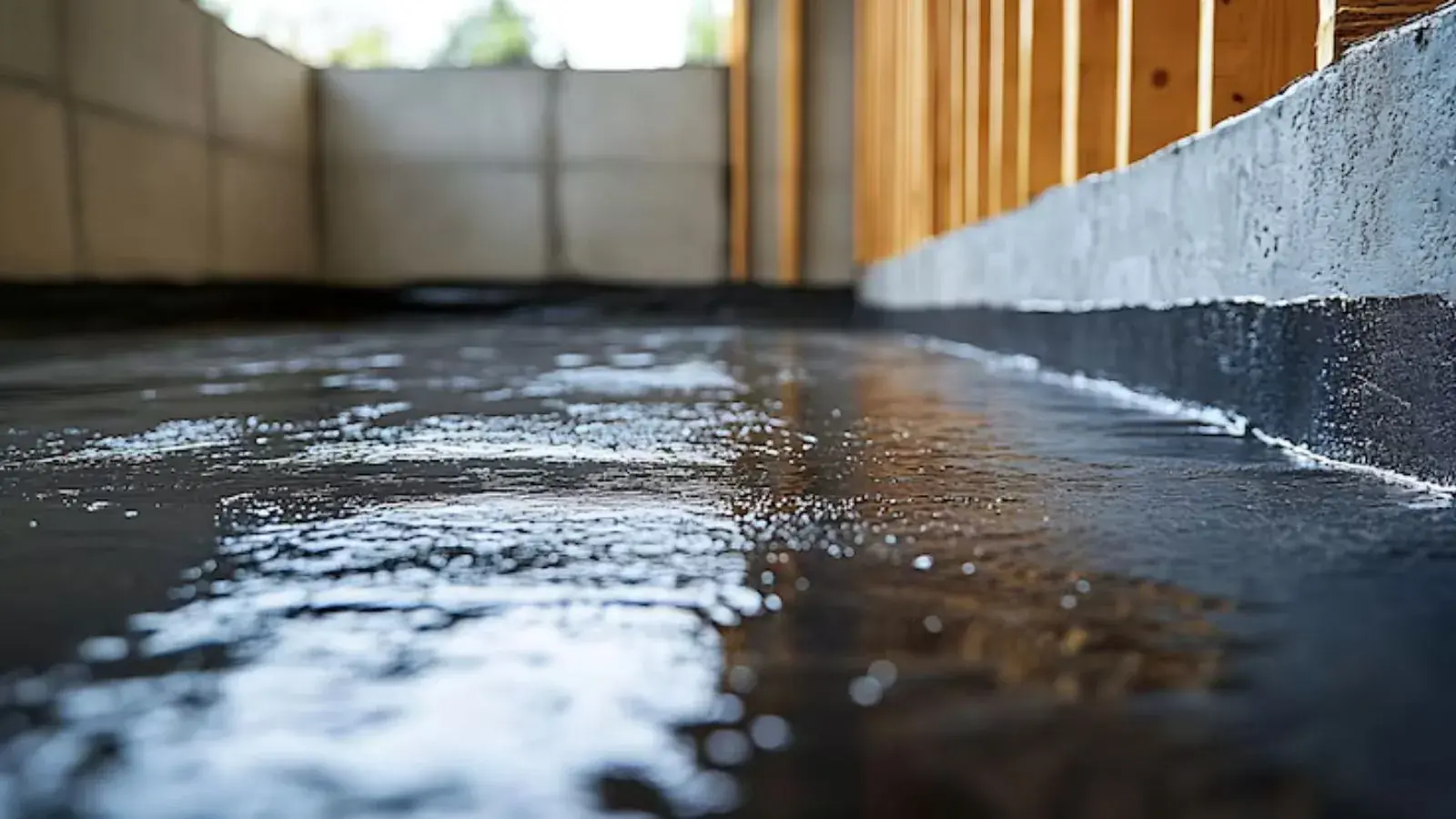
Where basement water comes from
Water enters a basement three ways. Surface water from rain and snowmelt seeps through cracks and wall joints. Groundwater rises from below through the floor, especially in spring. Plumbing problems, such as a leaking pipe or a failed water heater, can also flood a basement. Only the first two are waterproofing problems.
Before spending money, rule out the plumbing. A leak in a supply or drain line can look like groundwater. Check the meter with all fixtures off, and see our leak detection page for how.
What interior waterproofing can do
| Method | What it does | Limit |
|---|---|---|
| Interior perimeter drain | Collects water at the footing and routes it to a sump | Does not stop water entering the wall |
| Sump pump and pit | Pumps collected water outside | Needs power and a backup |
| Crack injection | Seals a single crack | Not a fix for widespread seepage |
| Sealers and paints | Slow moisture vapor | Cannot stop active water pressure |
| Dehumidifier | Lowers humidity | Does not remove water |
Interior systems work with the water, not against it. They give it a path out. That is why they are often more reliable than trying to seal a wall from within.
What it cannot do
Interior waterproofing does not stop water from reaching the foundation. If the cause is surface grading, clogged gutters or a downspout dumping against the wall, fix that first. It costs far less than a drain system and often solves the problem.
A foundation with a major structural crack or bowing wall is not a plumbing problem. We refer it to a foundation specialist.
Sump pump, the heart of the system
A sump pit and pump collect the water an interior drain gathers and send it outside. Size the pump to the inflow, use a check valve to stop backflow and make sure the discharge goes well away from the house. A battery backup protects you when storms knock out the power, which is when the basement is most at risk.
Test the pump twice a year by pouring in a bucket of water. We install and repair sump pumps, as described on our plumbing installation page.
A sensible order of operations
- Fix the outside first. Gutters, downspouts and grading.
- Rule out plumbing leaks. Check the meter and visible pipes.
- Seal visible cracks. Inject or patch isolated ones.
- Add a drain and sump if water persists. Interior perimeter system.
- Add a backup power source. Battery or water-powered backup.
When water is already coming in
What to do when the basement is flooding
- 1Stay out of standing water if the panel or outlets are underwater.
- 2Switch off power only if you can reach the panel while dry.
- 3Move valuables upward and unplug appliances.
- 4Pump or bail water from the lowest point to a safe discharge.
- 5Photograph the water line before cleanup.
Cost drivers for an interior system
- Linear feet of wall. A perimeter drain runs along the walls where water enters, so length sets the work.
- Slab cutting. A channel is cut in the floor, which takes time and creates dust and debris.
- Pump and basin. A larger pump, a sealed basin and a battery backup cost more.
- Discharge routing. A long run to a safe outlet adds labor.
- Finishes. A finished basement needs more careful work and repair afterward.
We give a price before work starts. For many basements, the exterior fixes and a sump pump are enough, and we will tell you if a full perimeter drain is more than you need.
Mold, humidity and the finish work
Water control is only part of a dry basement. Humidity from the ground and from daily life can leave a basement damp even without liquid water. A dehumidifier set to about 50 percent, with a drain hose to the sump or a floor drain, handles what the drain system does not.
If mold has grown, fix the water first, then clean or remove affected materials. Mold remediation is a separate trade from plumbing. We fix the water source and recommend a specialist for the cleanup when the growth is widespread.
How to tell where the water is coming from
Tape a square of plastic wrap to a wet-looking wall for a day. If moisture forms on the outside of the plastic, humidity from the air is the cause. If it forms behind the plastic, moisture is moving through the wall. Water that appears at the floor edge after rain points to surface water, and water that appears in the middle of the slab in spring suggests groundwater.
Mark where and when water appears. A pattern, such as always at one corner after a heavy rain, points to a downspout or a grade problem outside. That information saves money, because the fix may be outside and far cheaper than an interior system.
Outside fixes that cost little and help a lot
Start with gutters and downspouts. Clean gutters in fall, and extend downspouts at least six feet away from the foundation. Check that soil slopes away from the house, with the ground falling about an inch per foot for the first several feet. Fill low spots near the foundation.
Window wells should have clear drains and covers. Patio slabs and walkways that tilt toward the house send water straight at the wall. These fixes cost little compared with an interior system, and many wet basements improve noticeably once they are done. If water still shows up after you try them, the interior options above are the next step.
Local note for Concord homes
Rain, snowmelt and frost
Concord receives about 42 inches of precipitation and 67.7 inches of snow a year, based on the city's climate data. Spring thaw sends meltwater into the ground fast, often while the soil is still partly frozen and cannot absorb it. That is the season when basements flood.
The minimum frost depth the city uses for footings is 48 inches, which also means a sump discharge line that sits shallow can freeze. Slope the line away from the house and use a discharge that can drain if it freezes. Homes near the Soucook and Merrimack rivers, as in Pembroke and Hooksett, have high water tables in spring. See Pembroke and Hooksett.
Questions homeowners ask
You can manage water from the inside with a drain and a pump. Stopping it at the wall is an exterior job.
If water collects or an interior drain routes water to a pit, yes. A battery backup helps.
Spring thaw with frozen ground sends water to the foundation, so wet basements often appear in March and April.
Still have a question about your situation? Call the 24/7 line and talk it through with a dispatcher.
Call (603) 815-9179Sources. According to the following: Precipitation, snowfall and frost depth are from the City of Concord's published climate and structural loads data.